
Best Dog Food for Shih Tzus (2026): Vet-Backed Guide
July 22, 2026 · 12 min read
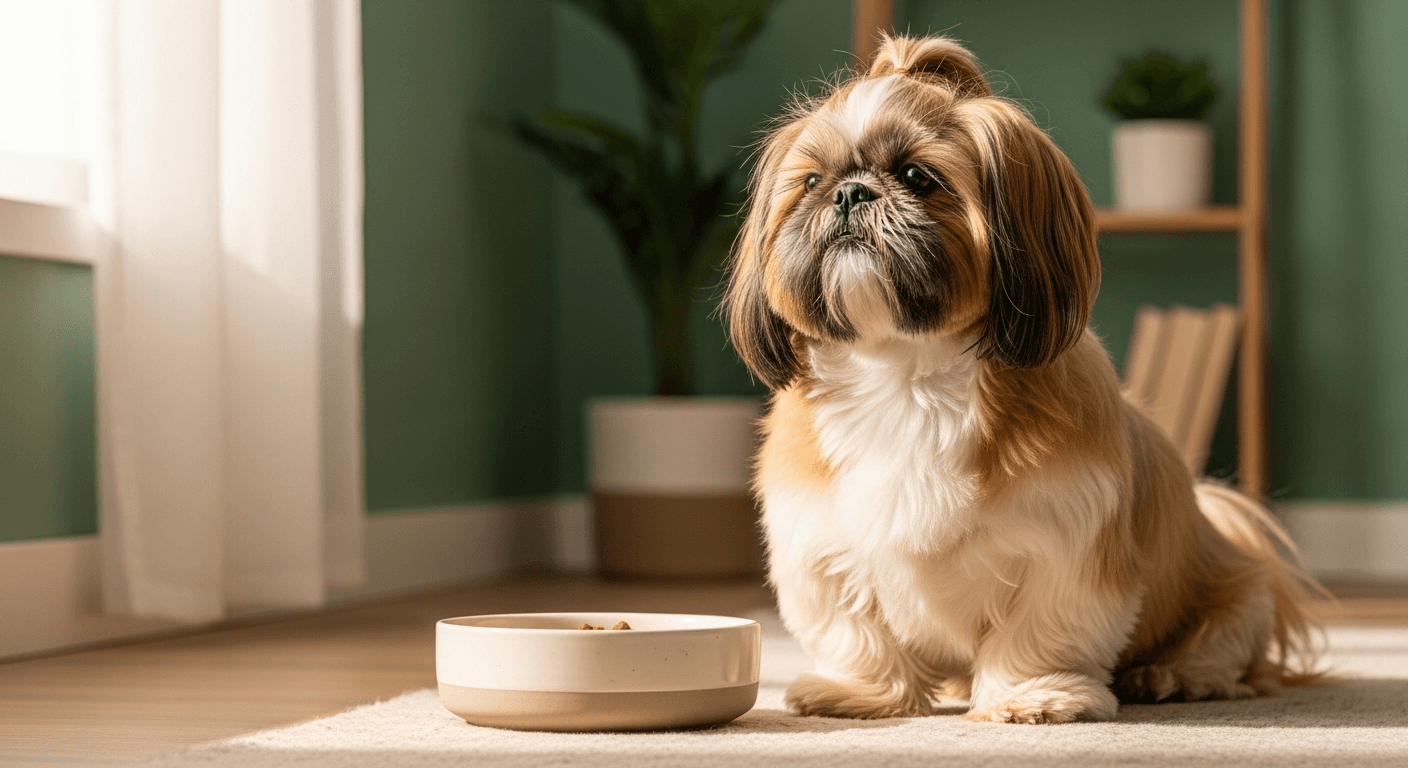
Short answer: the best food for a Shih Tzu is a complete-and-balanced small-breed diet with a kibble shape a shortened muzzle can actually pick up, fed to a measured calorie target to prevent the weight gain this breed slides into easily. Most adult Shih Tzus need about 300–450 kcal per day. Two things separate this breed from other small dogs: the mechanics of eating with a brachycephalic face, and a coat that is a genuine nutritional demand.
Start with the breed's real risks
- Weight gain. The most common nutrition problem in the breed. A modest calorie requirement, typically low activity, and a long coat that hides body shape make it easy to miss until it is significant.
- Brachycephalic eating mechanics. A shortened muzzle and often an undershot jaw change how the dog grips food. Many Shih Tzus scoop rather than bite.
- Skin and coat conditions. Atopic dermatitis and skin-fold dermatitis are both common, and the continuously growing coat needs raw materials.
- Dental crowding. Like most small breeds, a full set of teeth in a compact and frequently misaligned jaw, with retained baby teeth common.
- Eye prominence. Not a nutritional issue directly, but shallow orbits mean bowls and feeding areas should not require pushing the face into tight spaces.
How much to feed a Shih Tzu
Adult Shih Tzus typically weigh 9–16 lb. Feed by calories rather than the bag's cup range.
Use RER = 70 × (kg)^0.75, multiplied by about 1.6 for a typical neutered adult pet.
| Shih Tzu's weight | Approx. daily calories (adult pet) |
|---|---|
| 9 lb (4.1 kg) | ~325 kcal |
| 11 lb (5.0 kg) | ~375 kcal |
| 13 lb (5.9 kg) | ~420 kcal |
| 16 lb (7.3 kg) | ~490 kcal |
| Senior / low activity | subtract ~10–15% |
| Needs to lose weight | see the weight-loss method below |
Run your dog's exact number through the dog calorie calculator, then convert to your bag's density with the portion converter. The underlying math is explained in our how much to feed guide.
Weigh portions in grams rather than scooping. At 350–400 kcal a day, a 20% scoop error is 70–80 calories, roughly a fifth of the daily allowance.
Kibble shape actually matters here
This is the most breed-specific and most overlooked point.
Brachycephalic dogs have a compressed facial structure, and the Shih Tzu frequently has an undershot jaw where the lower jaw extends past the upper. That combination changes prehension, the mechanics of picking food up. Instead of a clean bite, many Shih Tzus scoop food with the lower jaw or tongue.
Kibble that is too large, perfectly spherical, or very hard tends to get pushed around the bowl, dropped, or swallowed whole. Owners read this as fussiness or a food dislike when it is a physical mismatch.
What helps: smaller kibble, and shapes that are flatter, crescent-shaped, or otherwise easy to trap against the floor of the bowl. Several manufacturers design specifically for brachycephalic breeds. A shallow, wide bowl helps too. Deep narrow bowls force the face further in, which is uncomfortable for a flat-faced dog with prominent eyes.
Before assuming pickiness, check three things: kibble size and shape, dental pain, and whether the bowl shape suits the face. All three are common and all three look identical from the outside.
What to look for in the food
Complete, balanced, life-stage appropriate
Check the AAFCO adequacy statement and prefer "animal feeding tests" over "formulated to meet." Our label guide walks through where to find it.
Coat support that is real rather than claimed
A continuously growing coat is a genuine nutritional demand. Hair is largely protein, and coat quality is one of the first things to degrade under inadequate protein or essential fatty acids.
What actually supports it is unglamorous: adequate high-quality protein and sufficient linoleic acid plus EPA and DHA. "Skin and coat formula" is not a regulated term, so read the guaranteed analysis rather than the front of the bag. A well-formulated adult maintenance food from a manufacturer doing real nutritional work will meet these needs without a special label.
Grooming frequency affects coat appearance at least as much as diet does. A matted coat is a grooming problem, not a food problem.
Nutrient targets for an adult Shih Tzu
| Nutrient | Adult target (dry matter) | Why it matters |
|---|---|---|
| Crude protein | 25–30% | Supports a continuously growing coat and lean mass |
| Crude fat | 12–16% | Coat quality and energy; the main calorie lever |
| Omega-3 (EPA + DHA) | ≥ 0.3% combined | Skin barrier and coat condition |
| Linoleic acid | Meets AAFCO minimum | Essential fatty acid for skin integrity |
| Fiber | 3–7% | Satiety in a breed prone to weight gain |
Reference points for comparing labels, not a prescription.
Skin problems: diagnose before you switch food
Shih Tzus are genuinely predisposed to skin disease, and the instinct is to change food. Usually that is the wrong first move.
Atopic dermatitis, environmental allergy, is far more common in this breed than true food allergy. Skin-fold dermatitis in the facial folds is a hygiene and anatomy issue treated by keeping folds clean and dry, not by diet. Neither responds to switching kibble.
If your veterinarian does suspect a food-responsive component, the diagnostic path is a strict 8–12 week elimination trial with a novel-protein or hydrolyzed diet and absolutely nothing else. No treats, no flavored medications, no table food. Rotating through retail "limited ingredient" foods does not test anything, because most contain proteins the dog has already encountered and many are cross-contaminated.
For the general picture, our dog food allergies guide covers how this is actually diagnosed.
Keeping a Shih Tzu lean
The breed's calorie budget is small enough that ordinary indulgence adds up fast, and the coat hides the evidence.
- Assess by hand, not by eye. Feel for ribs under a thin fat layer, a waist when viewed from above, and a tuck from the side. A long coat can conceal a full body condition point.
- Hold treats under 10% of daily calories: about 30–45 kcal, and subtract them from meals rather than adding them.
- Watch the household. Shih Tzus are companion dogs and are usually near people who are eating. A shared piece of cheese is around 110 kcal, roughly a quarter of the day's allowance.
- Two measured meals a day suits most adults; puppies eat three to four times daily until around six months.
- Adjust for reduced activity as the dog ages. Senior Shih Tzus commonly need 10–15% fewer calories while keeping protein adequate.
If your Shih Tzu is already overweight, our weight loss guide sets out the calorie targets and the safe rate of loss.
What does not deserve your attention
- "Shih Tzu" on the package. Breed-named foods are a marketing segment, not a regulated category. The kibble shape may genuinely suit the breed, that part can be real, but the nutrition inside is ordinary small-breed food.
- Grain-free by default. A formulation choice rather than a health upgrade, and the subject of an ongoing FDA inquiry into diet-associated heart disease. See our grain-free guide.
- "Skin and coat" as a claim. Unregulated. Read the fatty acid and protein numbers instead.
- Star ratings from review sites. They score ingredient lists for an average dog, not a 12 lb brachycephalic companion breed. Here is why those ratings mislead.
The bottom line
For a Shih Tzu, "best food" means complete and balanced for the life stage, physically easy for a shortened muzzle to eat, adequate in protein and essential fatty acids for a demanding coat, and, most importantly, measured against a calorie target rather than poured.
Get the kibble shape right, keep the dog lean under all that coat, and handle skin problems through diagnosis rather than serial food changes. That covers the parts of Shih Tzu nutrition that genuinely matter.
The right specific product still depends on your dog's age, weight, dental status, coat condition, and any diagnosed disease. IntelliBowl builds a shortlist for your dog rather than the breed average. See the dog food recommendations hub.
Get a food plan matched to your Shih Tzu; free, 60 seconds →
FAQ
Quick answers sourced from veterinary literature
These mirror the medically reviewed IntelliBowl notes on this slug and exist to help crawlers summarize quotable excerpts.
How much should I feed a Shih Tzu?
A typical adult Shih Tzu weighs 9–16 lb and needs roughly 300–450 kcal per day. Calculate rather than guess: RER = 70 × (kg)^0.75 multiplied by about 1.6 for a neutered adult. A 12 lb (5.4 kg) dog has an RER near 248 kcal and a maintenance target around 395 kcal. Because the breed gains weight readily, weigh portions and reassess body condition every two weeks rather than trusting the bag's range.
Does kibble shape matter for a brachycephalic breed?
It does. A shortened muzzle and an undershot jaw change the mechanics of picking food up, many Shih Tzus scoop rather than bite. Kibble that is too large, too round, or too hard can be dropped, swallowed whole, or refused. Small-breed formulas designed for brachycephalic dogs often use a flatter or crescent shape that is easier to grip. If your dog struggles, this is worth troubleshooting before assuming pickiness.
What should I feed a Shih Tzu with skin problems?
Start with a veterinary diagnosis, since Shih Tzus are predisposed to atopic dermatitis and skin-fold dermatitis, and both are far more common than true food allergy. If diet is implicated, your veterinarian will usually run a strict 8–12 week elimination trial using a novel-protein or hydrolyzed diet with nothing else passing the dog's lips. For general coat quality rather than disease, adequate EPA and DHA and quality protein do more than any 'skin and coat' label.
Why do Shih Tzus gain weight so easily?
They combine a modest calorie requirement with low typical activity and considerable owner-directed charm. At 300–400 kcal a day, the margin for error is small. A couple of biscuits and a piece of cheese can be a third of the daily budget. Add a long coat that visually hides weight gain and it is easy to miss until it is significant. Run your hands over the ribs regularly rather than judging by eye.
Do Shih Tzus need special food for their coat?
They need adequate protein and fat, which any well-formulated food provides. A continuously growing coat is a genuine nutritional demand, and hair is largely protein. Look for a food meeting AAFCO adult maintenance with named animal protein and stated EPA and DHA rather than a 'coat formula' claim, which is unregulated. Grooming frequency and skin health affect coat appearance at least as much as diet does.
How many meals a day should a Shih Tzu eat?
Two measured meals a day suits most adults, with puppies eating three to four times daily until about six months. Splitting the allowance helps with a breed that will happily lobby for more, and scheduled meals make appetite changes visible. Avoid free-feeding, which makes intake untrackable in a dog with a small calorie budget and a strong tendency toward weight gain.
Are Shih Tzus prone to dental problems?
Yes. Like most toy and small breeds they have crowded teeth in a compact and often undershot jaw, which promotes plaque retention and periodontal disease. Retained deciduous teeth are also common. Dental-format kibble and VOHC-accepted chews help modestly and must be counted within the daily calories, but daily toothbrushing plus professional cleaning under your veterinarian's guidance is what actually protects the teeth.