
Best Dog Food for German Shepherds (2026): Vet-Backed Guide
May 31, 2026 · 14 min read
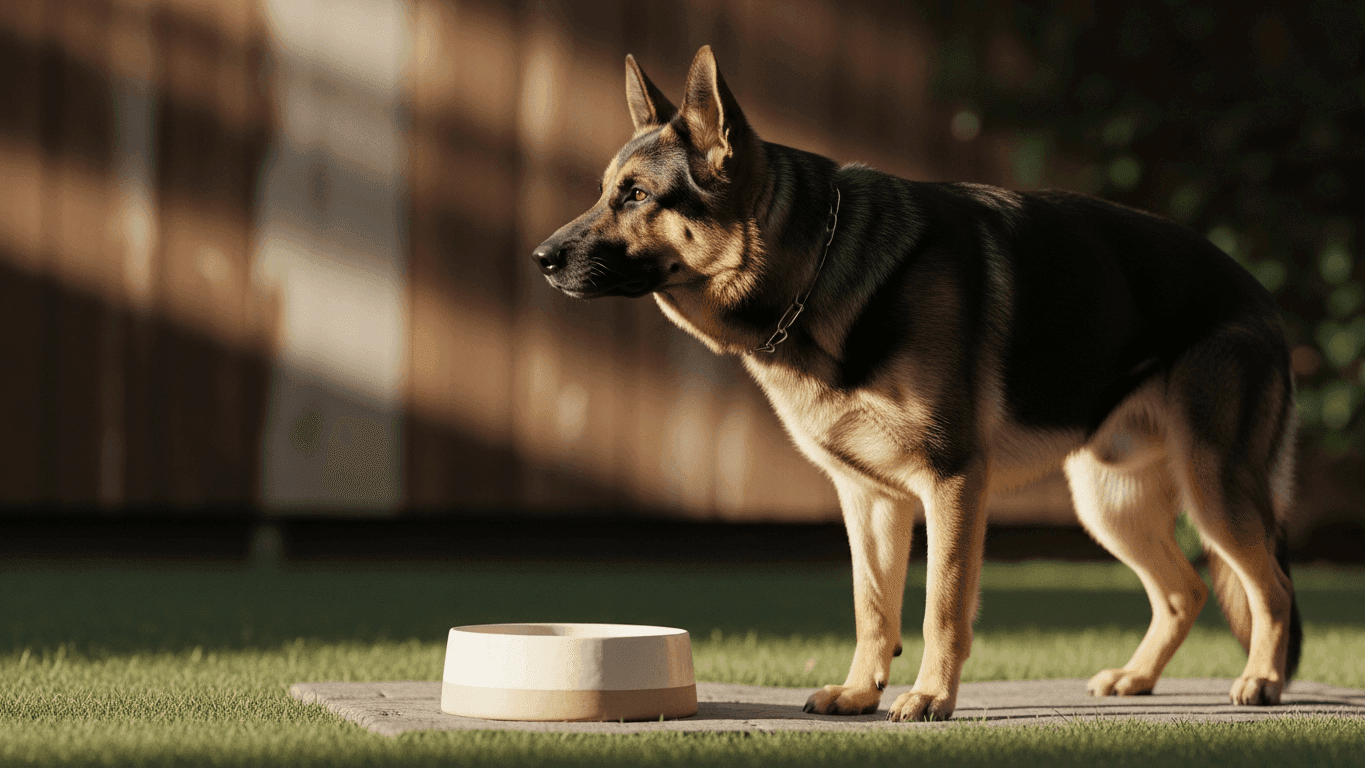
Short answer: the best food for a German Shepherd is a complete-and-balanced, AAFCO feeding-trial-substantiated, large-breed diet matched to life stage, calorie-controlled, and fed in a way that respects the breed's deep chest and sensitive gut. Shepherds are predisposed to hip and elbow dysplasia, have famously touchy digestion, and (like other large, deep-chested breeds) carry elevated bloat (GDV) risk. Growth control in puppyhood and digestibility throughout life are the levers that matter most.
There is no single "German Shepherd" product. Here is what actually matters for the breed.
Start with the breed's real risks
- Joint disease. Hip and elbow dysplasia and degenerative joint disease are common. Lean body condition and controlled growth are the biggest dietary levers.
- Sensitive digestion. Shepherds are prone to loose stool, gas, and conditions like exocrine pancreatic insufficiency (EPI). Digestibility and consistency are priorities.
- Bloat (GDV) risk. As a large, deep-chested breed, Shepherds are at elevated risk of gastric dilatation-volvulus. Feeding pattern (meal size, timing, and rest around meals) matters, not just the recipe.
- High activity in working lines. Working and sport Shepherds need their calories scaled up; the pet Shepherd usually needs fewer than the bag suggests.
What to look for in the food
Complete, balanced, and feeding-trial substantiated
Look for an AAFCO statement, preferring "animal feeding tests" over "formulated to meet." Our dog food label guide shows where to find it.
Large-breed life-stage formula
| Life stage | What the food should be |
|---|---|
| Puppy (to ~18–24 months) | Large-breed puppy or all-life-stages formula with controlled calcium and calories |
| Adult | Large-breed adult maintenance, calorie-controlled, highly digestible |
| Senior | Lower calories as activity drops, protein kept adequate, joint support |
Large-breed puppy food is the correct choice for a Shepherd pup. Controlled calcium (1.2–1.8 g/1,000 kcal) and growth rate reduce developmental orthopedic disease risk. See our puppy and AAFCO growth guide.
Digestibility and consistency
For a breed with a sensitive gut, prioritize a highly digestible, consistent diet with a named protein source. Persistent GI signs (chronic diarrhea, weight loss despite a good appetite) warrant a veterinary work-up (EPI is diagnosable and treatable). Our sensitive stomach guide covers what helps.
Joint-supportive nutrients
Large-breed diets often include omega-3 fatty acids (EPA and DHA) and glucosamine/chondroitin. Omega-3s have reasonable evidence for joint comfort; the supplemental compounds are lower-certainty but low-risk. Neither replaces lean body condition.
Nutrient targets for a German Shepherd
Practical dry-matter targets for a healthy adult Shepherd. Reference points for comparing labels, not a prescription.
| Nutrient | Adult target (dry matter) | Why it matters for Shepherds |
|---|---|---|
| Crude protein | 25–30% | Lean muscle that supports dysplastic joints |
| Crude fat | 12–16% | Energy for an active breed; scale down for pets |
| Calcium (puppy) | 1.2–1.8 g / 1,000 kcal | Controls large-breed growth velocity |
| Omega-3 (EPA + DHA) | ≥ 0.3% combined | Joint comfort, skin, and coat |
| Digestibility | High (named protein, simple recipe) | The breed's sensitive gut is a priority |
How much (and how) to feed a German Shepherd
Feed by calories, not the bag's cup range. Figures assume a neutered, moderately active adult on a ~375 kcal/cup food; run the exact number through the dog calorie calculator and convert with the portion converter.
| Shepherd's weight | Approx. daily calories | Approx. cups/day (375 kcal/cup) |
|---|---|---|
| 60 lb (lean female) | ~1,225 kcal | ~3.3 cups |
| 75 lb (typical adult) | ~1,450 kcal | ~3.9 cups |
| 88 lb (large male) | ~1,600 kcal | ~4.3 cups |
| Working / sport line | add 30–60% | ~5–7 cups |
| Senior / low activity | subtract ~15% | ~2.8–3.7 cups |
Bloat-aware feeding pattern matters for this breed: split the daily amount into two or three meals rather than one large bowl, avoid vigorous exercise right around mealtimes, and discuss preventive gastropexy with your veterinarian if you have a high-risk line. Subtract treats from the total and recheck body condition every couple of weeks.
Keeping a Shepherd lean and settled
- Feed by calories and measure meals. Our how-much-to-feed guide has the RER/MER math.
- Keep treats under 10% of calories and change foods gradually over 7–10 days.
- Score body condition every couple of weeks: feel ribs easily, see a waist and belly tuck.
- Match calories to the actual dog: a pet Shepherd is not the working dog the bag pictures.
What does not deserve your attention
- "German Shepherd" on the package. Breed-named foods are marketing, not a regulated category; a well-formulated large-breed food can fit better.
- Grain-free by default. Grain-free is a descriptive choice tied to an FDA inquiry into diet-associated heart disease, read the grain-free guide first.
- Star ratings from aggregators. They score an average dog, not your Shepherd; here is why those ratings mislead.
The bottom line
For a German Shepherd, "best food" means an AAFCO-substantiated, large-breed, calorie-controlled, highly digestible diet: large-breed puppy formula during growth, omega-3s and joint support through life, and a bloat-aware feeding pattern. Keep the dog lean, keep the gut settled, and feed a manufacturer that does real nutritional work.
The exact best product depends on your dog's digestion, activity, weight, and joint history. IntelliBowl factors those into a shortlist built for your Shepherd, compare it on our dog food recommendations hub.
Get a food plan matched to your German Shepherd; free, 60 seconds →