
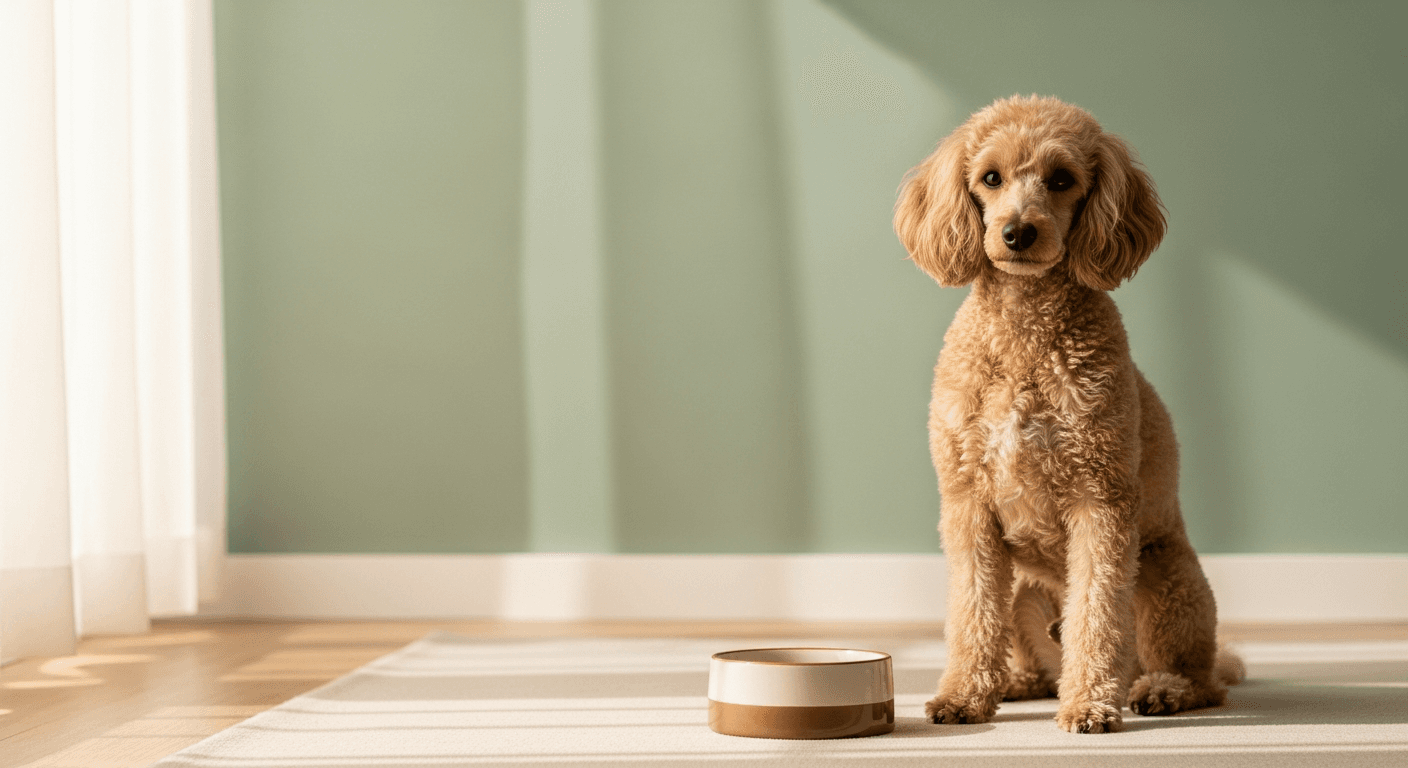
Short answer: the best food for a Poodle is a complete-and-balanced, AAFCO-substantiated diet matched to the dog's size variety and life stage. A Toy Poodle and a Standard Poodle are nutritionally different animals: small Poodles need dense calories, dental-friendly kibble, and protection against low blood sugar in puppyhood, while Standards are a large breed that needs growth control and bloat-aware feeding. Match the food to the variety and keep the dog lean.
There is no single "Poodle" product. Here is what actually matters across the three sizes.
Start with the breed's real risks
- Size drives everything. Toy (under ~10 lb), Miniature (~10–15 lb), and Standard (~45–70 lb) Poodles have different calorie densities, kibble-size needs, and risk profiles.
- Dental disease (small Poodles). Toy and Miniature Poodles are prone to periodontal disease and tooth crowding; kibble size and dental care matter.
- Hypoglycemia (toy puppies). Very small puppies can drop blood sugar if meals are spaced too far apart; they need frequent feeding.
- Bloat and growth (Standards). As a large, deep-chested breed, Standard Poodles carry GDV risk and need large-breed growth control as puppies.
- Skin and coat. The signature coat benefits from adequate fat and omega fatty acids; Poodles can also have allergies.
What to look for in the food
Complete, balanced, and feeding-trial substantiated
Look for an AAFCO statement and prefer "animal feeding tests" wording. Our dog food label guide shows where to find it.
Match the formula to the size variety
| Poodle variety | Formula priorities |
|---|---|
| Toy / Miniature | Small-breed formula, dense calories, small kibble, frequent meals for puppies |
| Standard (adult) | Large-breed adult maintenance, calorie-controlled |
| Standard (puppy) | Large-breed puppy formula with controlled calcium and growth rate |
For a Standard Poodle puppy, large-breed growth control (calcium 1.2–1.8 g/1,000 kcal) reduces orthopedic risk. See our puppy and AAFCO growth guide. For toy puppies, the opposite concern applies: feed small, frequent meals to avoid hypoglycemia.
Coat and skin support
Adequate fat plus omega-3 and omega-6 fatty acids underpin the Poodle coat. Persistent itching or recurrent ear infections are a veterinary conversation; see our allergies guide.
Nutrient targets for a Poodle
Practical dry-matter targets for a healthy adult Poodle. Reference points for comparing labels, not a prescription.
| Nutrient | Adult target (dry matter) | Why it matters for Poodles |
|---|---|---|
| Crude protein | 25–30% | Lean muscle across all sizes |
| Crude fat | 12–16% (small), 10–14% (standard) | Coat support; small Poodles need denser energy |
| Calcium (standard puppy) | 1.2–1.8 g / 1,000 kcal | Controls large-breed growth velocity |
| Omega-3 (EPA + DHA) | ≥ 0.3% combined | Skin barrier and coat quality |
How much to feed a Poodle
Feed by calories, not the bag's cup range. Figures assume a neutered, moderately active adult on a ~390 kcal/cup food; run the exact number through the dog calorie calculator and convert with the portion converter.
| Poodle's weight | Approx. daily calories | Approx. cups/day (390 kcal/cup) |
|---|---|---|
| 7 lb (Toy) | ~250 kcal | ~0.6 cups |
| 15 lb (Miniature) | ~430 kcal | ~1.1 cups |
| 55 lb (Standard) | ~1,150 kcal | ~3.0 cups |
| Senior / low activity | subtract ~15% | varies by size |
For toy and miniature Poodles, weigh portions in grams. At these sizes a quarter-cup error is a large fraction of the day's calories. Split into two meals (more for toy puppies), subtract treats from the total, and recheck body condition every couple of weeks.
Keeping a Poodle lean and healthy
- Feed by calories and measure meals: our how-much-to-feed guide has the math.
- Mind the teeth (small Poodles): appropriate kibble, dental chews within the treat budget, and regular dental care.
- For Standards, feed bloat-aware: split meals, avoid hard exercise right around eating, and discuss gastropexy with your vet.
- Keep treats under 10% of calories and score body condition every couple of weeks.
What does not deserve your attention
- "Poodle" on the package. Breed-named foods are marketing; match the size formula instead.
- Grain-free by default. A descriptive choice tied to an FDA inquiry into diet-associated heart disease, read the grain-free guide first.
- Star ratings from aggregators. They score an average dog, not your Poodle; here is why those ratings mislead.
The bottom line
For a Poodle, "best food" means an AAFCO-substantiated diet matched to the dog's size variety and life stage. Dense, small-kibble nutrition for Toys and Minis, large-breed growth control for Standard puppies, and lean body condition throughout. Match the formula to the size, support the coat with omega-3s, and feed a manufacturer that does real nutritional work.
The exact best product depends on your Poodle's variety, age, coat and skin history, and weight. IntelliBowl factors those into a shortlist built for your dog, compare it on our dog food recommendations hub.
Get a food plan matched to your Poodle; free, 60 seconds →